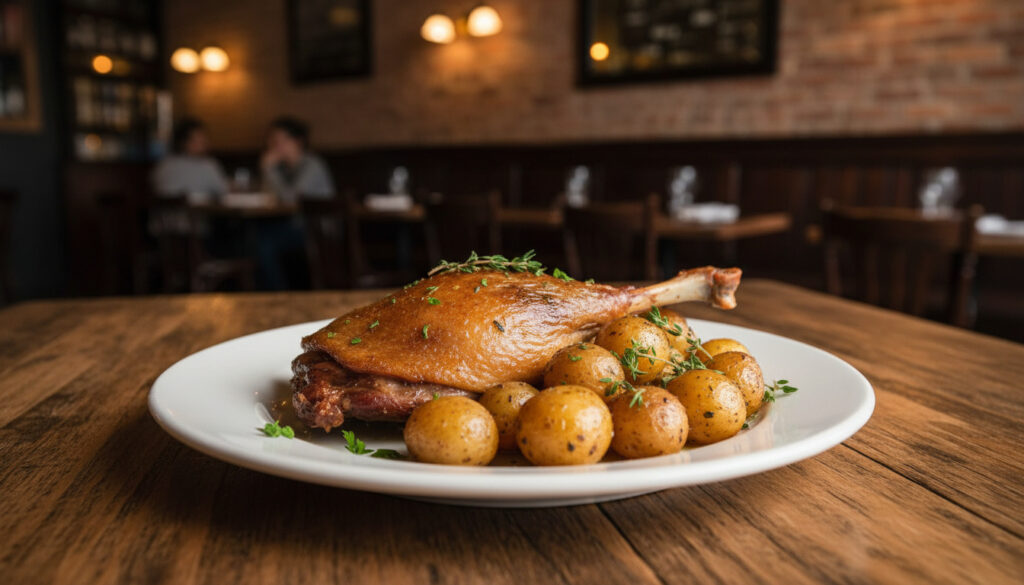
Duck Confit Near Me – De Beste Adressen In Jouw Buurt
Locating Authentic Duck Confit Nearby
Finding exceptional duck confit requires more than a quick search query. This traditional French preservation method transforms duck legs into tender, flavorful delights through slow cooking in rendered fat. Whether you are seeking a cozy bistro listed in our restaurant guide or planning to prepare the dish at home, understanding what distinguishes authentic confit from standard roasted duck helps ensure a memorable dining experience.
Types of Establishments
Traditional Bistros
Family-run establishments often age their duck for days before the slow-cooking process begins, resulting in deep, concentrated flavors that mass-market kitchens cannot replicate.
Fine Dining Venues
Executive chefs frequently enhance classic recipes with modern techniques and local herb infusions, creating interpretations that respect tradition while reflecting regional tastes.
Specialty Markets
Gourmet butchers and French delis may offer vacuum-sealed confit ready for home finishing, allowing home cooks to achieve restaurant-quality results with proper technique.
Understanding Local Availability
Not every French restaurant serves true confit. The preparation demands specific aging and cooking time that many casual establishments skip. When examining menus, look for indications that the kitchen cures the duck legs in salt before submerging them in fat for hours. Classic preparation methods remain the gold standard, though some innovative chefs incorporate regional spices to reflect local tastes.
Preparation Comparisons
| Method | Cooking Time | Texture Result | Best For |
|---|---|---|---|
| Traditional Confit | 8-12 hours | Falling off bone | Restaurants |
| Quick Confit | 3-4 hours | Tender but firm | Home cooks |
| Sous Vide | 12-24 hours | Uniformly silky | Modern kitchens |
What Defines Authentic Preparation
The technique originated as a preservation method in Gascony, France. Chefs rub duck legs with salt, garlic, and herbs, refrigerate them for 24 to 36 hours, then rinse and dry the meat before submerging it in duck fat. Precision temperature control ensures the connective tissues break down without the meat becoming tough. When finished properly, the flesh pulls away from the bone with minimal resistance while the skin crisps under a final high-heat sear.
From Salt to Service
The temporal commitment distinguishes confit from quick-cooked duck preparations. After the initial curing phase, which lasts up to two days depending on the meat’s thickness, the cooking itself requires patience. Historical records suggest that before refrigeration, cooks preserved duck in fat for months. Classic recipes reflect this heritage, emphasizing the low-and-slow approach that renders the fat while keeping the meat moist.
Dispelling Common Misconceptions
Many diners confuse duck confit with roasted duck or pan-seared breast. The confit method produces a distinctly different texture—silky rather than chewy, with a richness that comes from the fat rather than the skin. Understanding the distinction helps set expectations when ordering. Additionally, despite the cooking medium, well-made confit does not taste greasy; the fat renders out during the curing and cooking process, leaving concentrated flavor.
Evaluating Quality in Local Establishments
When assessing nearby options, examine the presentation. High-quality confit arrives with crisp, golden skin that shatters when cut. The flesh should separate easily from the bone but retain its structure on the plate. Accompaniments matter: traditional service includes garlicky potatoes cooked in the excess duck fat, known as pommes de terre à la sarladaise. Expert techniques visible in restaurant cooking include scoring the skin before the final crisping and resting the meat properly to redistribute juices.
Professional Perspectives
The difference between good confit and exceptional confit lies in the curing time. Rush that stage, and you lose the depth of flavor that makes this dish legendary.
— Chef Marc Dupont, Le Petit Bistro
We render our own fat from excess trim. It cycles back into the next batch. That continuity of flavor cannot be replicated with commercial duck fat.
— Sarah Chen, Culinary Director
Key Considerations for Your Search
Locating outstanding duck confit requires attention to preparation details that separate authentic technique from shortcuts. For those interested in broader French culinary traditions, prioritize establishments that age their duck properly and finish the skin à la minute. For home preparation, invest in quality duck fat and allow sufficient curing time. Reliable recipes emphasize patience over complexity, proving that this century-old technique remains accessible to dedicated home cooks.
Frequently Asked Questions
How long does duck confit last when stored properly?
When fully submerged in rendered fat and refrigerated, duck confit remains safe to eat for up to six months. The fat creates an oxygen barrier that prevents bacterial growth. Once removed from the fat, consume within three to four days.
Can duck confit be prepared with other poultry?
While traditionally made with duck legs, the confit technique works with chicken thighs, turkey legs, and goose. However, cooking times and fat temperatures require adjustment since different proteins have varying densities and connective tissue content.
Why is duck confit typically expensive in restaurants?
The cost reflects labor intensity and ingredient volume. Each batch requires days of curing, hours of careful cooking, and significant quantities of duck fat, which is reusable but expensive initially. The skill required to achieve the proper texture also factors into pricing.
Meer gerelateerde berichten
 Happy Italy Den Bosch: Actuele openingstijden, menu & nieuws
 Those Who Kill seizoen 3: verhaal, afleveringen en cast
 S&P 500 Koers Verwachting – Analistenprognoses 2025
 Wordle van de Dag: Hints en Antwoord Vandaag
 Wat te doen met Pinksteren 2026: beste tips en uitjes
 DJI Mini 4 Pro kopen: specificaties, prijs en alternatieven
 Cadac Safari Chef 30: laag- of hogedruk? Gas en veiligheid
 ASICS Gel-NYC Cream Cloud Grey: Kopen en Prijzen
